
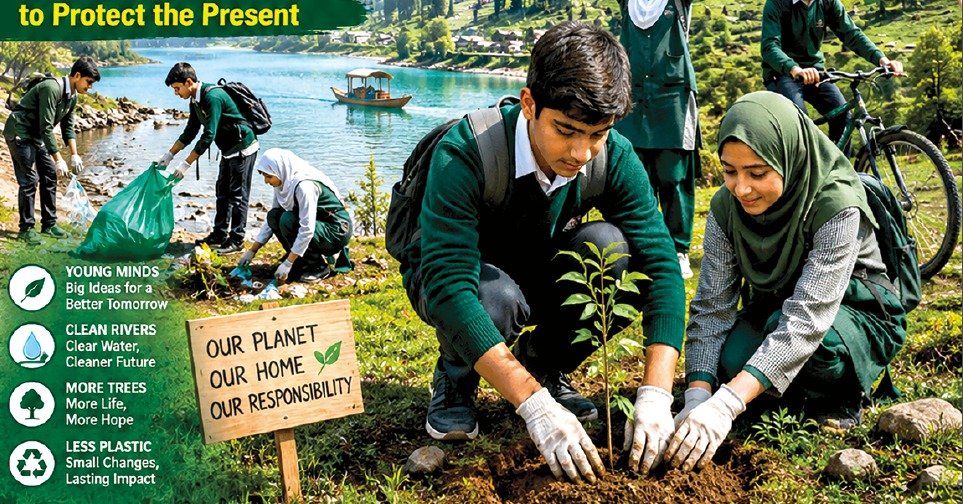
When the Future Decides to Protect the Present

Dr. Touseef Bhatt
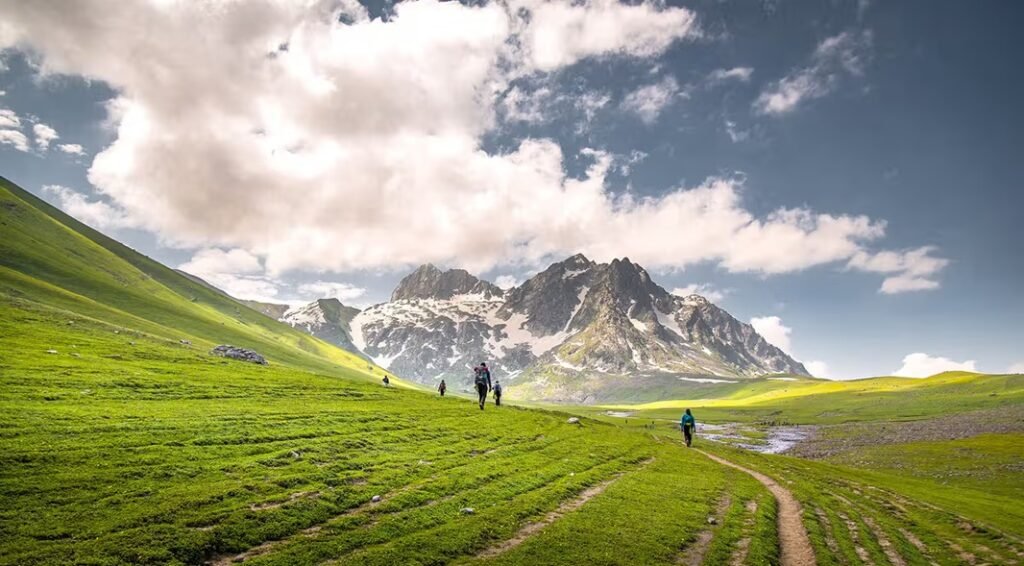
Kashmir has long been celebrated as “Paradise on Earth”—a land where snow-capped mountains, majestic Chinars, crystal-clear streams, and serene lakes have inspired poets, artists, and travelers for centuries. Yet behind this breathtaking beauty lies an uncomfortable truth. The Valley’s fragile ecosystem is under immense pressure from climate change, pollution, shrinking wetlands, deforestation, and rapid urbanization.
The fight to preserve Kashmir’s natural heritage cannot be won through policies and legislation alone. Its greatest hope lies in the hands of its youngest citizens. Across the Valley, students are emerging as environmental champions, proving that meaningful change begins with awareness, action, and responsibility.
A Paradise Under Pressure
Nature has always been Kashmir’s greatest treasure, but today it is increasingly vulnerable.
The iconic Dal Lake, once known as the jewel of Kashmir, continues to lose its original size due to encroachments, silt accumulation, pollution, and unchecked weed growth. The Jhelum River, the Valley’s lifeline, struggles against untreated waste and plastic pollution. Meanwhile, erratic snowfall, rising temperatures, and rapidly melting glaciers are altering Kashmir’s climate and threatening its water security.
These environmental challenges are no longer distant concerns—they directly affect livelihoods, agriculture, tourism, biodiversity, and public health.
Students: The New Environmental Vanguard
Across schools, colleges, and universities, Kashmiri students are redefining environmental leadership. They are moving beyond classroom discussions and becoming active participants in conservation.
Their contribution extends far beyond occasional campaigns. They are nurturing a culture of environmental responsibility that reaches homes, neighborhoods, and entire communities.
Turning Awareness into Action
Fighting the Plastic Menace
One of the most visible contributions of students has been the fight against plastic pollution.
Youth-led cleanliness drives around Dal Lake, the Jhelum River, local parks, and public spaces have demonstrated that civic responsibility begins with individual action. More importantly, students have become educators—encouraging families, shopkeepers, and local communities to reduce dependence on single-use plastics and embrace sustainable alternatives.
Their greatest achievement is not merely collecting waste, but changing attitudes.
Greening Kashmir—One Sapling at a Time
Tree plantation has become a powerful symbol of hope.
Students across the Valley actively participate in plantation campaigns, restoring degraded landscapes and expanding green cover around schools, villages, and urban spaces. Every sapling planted represents an investment in cleaner air, climate resilience, biodiversity, and future generations.
Beyond ceremonial plantations, many institutions now encourage students to adopt and nurture trees, transforming environmental campaigns into long-term commitments.
Digital Voices for Nature
The digital generation has discovered a powerful tool for environmental advocacy.
Using social media platforms, students document ecological degradation, promote conservation campaigns, celebrate biodiversity, and highlight the importance of protecting endangered species such as the Hangul and migratory birds that visit Kashmir’s wetlands.
Their photographs, videos, and awareness campaigns amplify local environmental issues to national and international audiences, creating greater public accountability and inspiring wider participation.
Challenges That Demand Collective Solutions
Despite their enthusiasm, young environmentalists continue to face significant obstacles.
Limited waste management infrastructure, insufficient recycling facilities, shortages of quality saplings, and seasonal weather constraints often reduce the impact of their efforts. Many awareness campaigns lose momentum because institutional support remains inconsistent.
These challenges underline the need for stronger collaboration between educational institutions, government departments, civil society organizations, and local communities.
Building the Green Classrooms of Tomorrow
Environmental education must evolve from theory into practice.
Schools and colleges should integrate sustainability into everyday learning through:
* Regular Green Audits
* Campus biodiversity mapping
* Waste segregation and recycling systems
* Rainwater harvesting projects
* Eco-clubs with measurable annual targets
* Scientific lake and wetland restoration projects
* Community outreach programmes
Higher educational institutions can further encourage innovation through research on climate adaptation, waste management, renewable energy, and sustainable technologies suited to Kashmir’s unique ecological conditions.
From Waste to Wealth
Environmental conservation can also become an engine of economic opportunity.
Engineering, science, and vocational students possess the creativity to develop affordable composting systems, eco-friendly packaging, low-cost water purification technologies, and innovative recycling solutions adapted to the Valley’s climate.
By combining traditional Kashmiri craftsmanship with modern environmental science, young innovators can create sustainable enterprises that protect both livelihoods and nature.
The Chinar Legacy
Few symbols represent Kashmir as profoundly as the majestic Chinar.
Every autumn, its leaves transform the Valley into a canvas of crimson and gold. Yet despite shedding its foliage, the Chinar remains firmly rooted—strong, resilient, and enduring.
Today’s students embody that same resilience. Their determination to protect rivers, lakes, forests, wildlife, and biodiversity reflects a deep understanding that environmental conservation is inseparable from Kashmir’s identity, culture, and future prosperity.
Call to Every Young Guardian
The responsibility of protecting Kashmir does not belong solely to governments or environmental organizations. It belongs to every citizen—and particularly to its youth.
The students of today are not simply the leaders of tomorrow. They are the guardians of today.
Every tree planted, every plastic bottle removed, every awareness campaign conducted, and every voice raised for nature strengthens the promise of a greener, healthier Kashmir.
If Paradise is to endure, it will be because its young guardians chose action over apathy, responsibility over convenience, and hope over indifference.
The future of Kashmir’s environment is already being written—and its authors are the students who have chosen to protect the paradise they proudly call home.
(The author is President, Rotary Club of Kashmir | Educationist | Mentor | Environmentalist)