

Sajjad Bazaz
Let me begin with an example of innate human tendency to be greedy. One of my close acquaintances had heard stories of making quick bucks in share market. To make his own success story, he invested a portion of his savings in some stocks/shares which he thought would earn him quick and hefty returns. Before buying the shares of a particular company, he had closely monitored its price movement. He purchased the shares at Rs. 25 a share. He set a target of Rs.30 to off load the share. Just after few days of his investment, the stock did hit Rs.30 mark. But he decided to hold out and revised his target to Rs.32. This time the stock didn’t appreciate, but took a turn downward at Rs.29. Now he again revised the target and decided to sell the stock once it hits Rs.30 again. But it never happened. The share price continued to drift lower.
Now panic gripped him and he succumbed to his fear. Finally he sold the stock at Rs. 23, below the buying price of Rs.25. Even as he lost Rs.2 per share, the fact is that he lost Rs.7 per share as the share price had touched Rs.30 mark which he had benchmarked to offload the stock. Later the share price of his stock fell to Rs.15 after he off loaded it at Rs.23.
It was a case of casino-like tendencies, which you as an investor should avoid.
So knowing when to sell is of paramount importance. Proper selling in the first instance helps to ensure gains are preserved. Secondly, it reduces the likelihood of incurring major losses. It’s here that booking of loss at nick of the time gave my acquaintance an opportunity to shift to a new profitable stock and saved him further loss of Rs.7 per share.
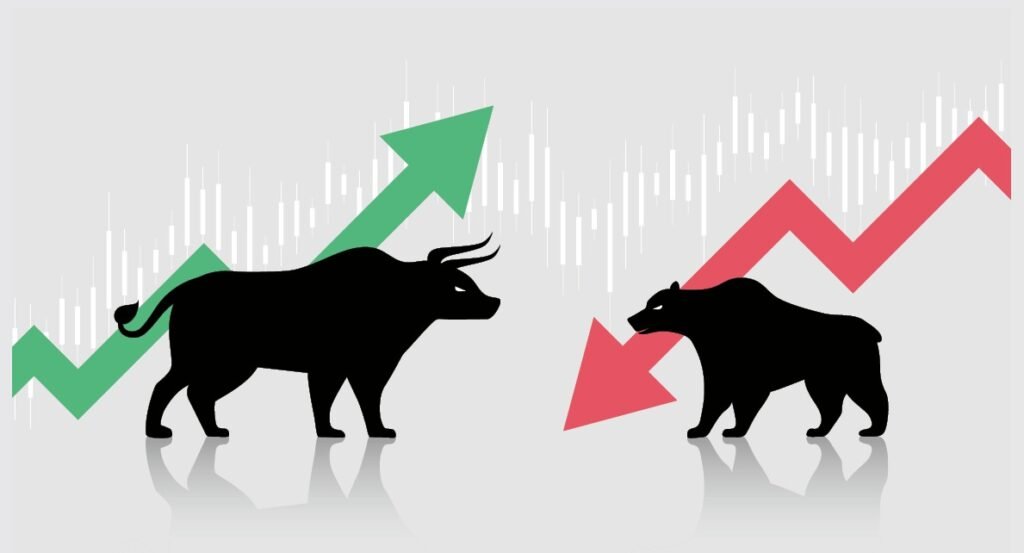
Notably, the coronavirus pandemic and subsequent countrywide lockdowns led to a surge of retail investors in the share markets. The story of the markets remain bullish as well as bearish and most of the time this bull and bear fight leaves the investors, especially those who are still raw in the market, as clueless. However, there are certain basic things which an investor, especially those who are new to this market, must know.
How should an investor evaluate selling and buying decision of stocks?
You have to keep it in mind if buying at the right price is vital; selling too is equally a vital link. It’s selling which decides your profit and loss in the investment matters. If you can’t sell at the appropriate time, the benefits of proper buying disappear.
No one wants a loss while being in the stock market. But if it happens, don’t let your ego get in the way of making the right decision. Most of the time, the best course of action is to cut your losses and move on to the next deal.
Meanwhile, selling a stock is triggered by two things – either it may be personal reason or may be market driven. You may find your risk tolerance reaching to maximum and you immediately off load the stock and reinvest in a new stock. Sometimes an ‘unexpected’ happens and you need cash to negotiate that ‘unexpected’. So you lay hand on your stock for this financial emergency. Or you may find the stocks in your investment portfolio not matching your moral and ethical values and you sell them.
The stock falling to unexpected levels are some of the market-driven reasons which may prompt you to sell the shares. There may be other valid reasons to sell , but it’s important to evaluate your selling decision in the context of all the alternatives and consequences.
Precisely, when a sale results in a loss, and is accompanied by an understanding of why that loss occurred, it too may be considered a good sell. Share market experts say selling is bad when it is dictated by fear. They want investors always to focus on selling dictated by rational reasons of valuations and price.
Why the terms ‘bull’ and ‘bears’ are used to describe trend of the markets?
A common consensus of this bull and bear theory describing the sentiment of the market has listed its origin to the animal behavior. The terms are linked to the way in which each animal (bull & bear) attacks its opponents. When one gets gored by a bull, one is usually getting launched into the air. And when one is attacked by a bear, it’s coming down on him from its standing position. In other words, a bull will thrust its horns up into the air, while a bear will swipe down.
What to do in a bull or bear market?
Investment experts describe a bull market as an ideal condition for an investor to take advantage of rising prices by buying early in the trend and then selling them when they have reached their peak. Even as it’s almost impossible to determine exactly the bottom and the peak of the market, the investors’ tendency to believe that the market will rise can help them to spot the bottom of a bullish trend. Experts opine that during the bull market, an investor can actively and confidently invest in more equity with a higher probability of making a return.
In a bear market, the chance of losses is greater because prices are continually losing value. However, investors can make money when stocks are falling using technique of short selling. An investor can wait on the side lines until he feels that the bear market conditions are nearing to an end, only starting to buy in anticipation of a bull market.
In succinct, whether bull or bear markets, both will have a large influence over the investors. It’s their hard earned money which remains parked in the stocks of different companies in the market. So, the basic thing is that investors should invest their money in stocks of quality companies. As long as an investor does his research and knows the real value behind a company, he doesn’t get scared of its price fluctuations.
How can financial advisors help investors to pick right stock at right time? What about the role of soothsayers or Voodoo scientists in the share market?
The financial market is flooded with varied financial instruments and it is impossible for an individual to understand everything that is available for them. In this crowd of financial instruments, individuals cannot pick what is best for them.
In these investment matters we have two key players who can predict future of stocks and the related markets. We have fundamental analysts (financial advisors) who focus on financials, policy decisions, company/sector-wide developments and so on to analyse the future movement of markets. There are also professional soothsayers, also known as voodoo scientists, who dish out their predictions on birth charts and correlations between stock prices and planetary movements, combination of numerology, tarot cards and horoscopes among other things.
Here I am reminded of the technical analysis tools known as Gann angles. William Delbert Gann is founder of this technique and is supposed to have used astrology to forecast stock prices as far back as in the 1920s. Gann angles is widely used by traders even today.
Meanwhile, importance of a financial advisor is as good as a doctor who prescribes medicines for treatment of illness. In other words, a financial advisor is like a medical doctor for an investor. You may think about yourself as the knowledgeable investor for having access to financial information, but the fact is that in present times advice of a financial advisor in the matters of money management especially in stock market cannot be overlooked.
Owing to unpredictable nature of financial markets, we cannot say financial advisors will give foolproof advice. However, his advice based on your particular situation and goals can help you to minimize the financial risks. Once you are on board with a financial advisor and your financial portfolio is put together, you need to monitor that portfolio. Don’t forget to update your advisor about any life situation change which you may undergo at any point of time. And remember, a stock broker is not a financial advisor, even though he may be sharing some investment tips with you.