
“Excellence in education is not just about producing high-performing students. It’s about creating an environment that nurtures each student’s unique potential and provides them with the tools, resources, and opportunities to thrive, regardless of their background.”
Achieving excellence in education is of paramount importance. It requires a combination of strategies designed to identify and nurture the hidden potential within students, guide them through their educational journey, and equip them with the skills needed to excel in their chosen fields.
Quality Teaching
There is no denying the fact that the foundation of any educational system is its teachers. So, teacher training is a key component in the quest for excellence. Teacher training programmes should not only focus on subject matter knowledge but also on contemporary teaching methods, classroom management, and emotional intelligence.
It’s equally important that teachers be encouraged to adopt a student-centered approach to learning, where they facilitate learning rather than merely imparting knowledge. This approach will help to promote critical thinking, creativity, and problem-solving skills among students, which are crucial for success in today’s rapidly evolving world.
Remember, if teachers are not well-equipped with the right knowledge, skills, and pedagogical strategies, the pursuit of excellence in education will get defeated.
Redesign Curriculum
The curriculum plays an important role in achieving excellence in education. So, the curriculum has to be dynamic and relevant. The curriculum which often focuses on rote learning and memorisation does not foster deep understanding or creativity. To promote excellence, curricula need to evolve and incorporate practical, hands-on experiences that encourage exploration and critical thinking.
For instance, as stated by the experts, introducing interdisciplinary courses that link subjects like science, technology, and the humanities can help students see the connections between different fields and think more holistically. It’s noteworthy that the curriculum changes should encourage students to engage with real-world problems, sparking their interest and making learning more meaningful.
Technology Integration
The physical infrastructure and technological resources available to students also play a significant role in their academic success. Technology, especially in today’s digital age, can be a powerful tool for promoting excellence in education. Tools like online learning platforms, educational apps, and virtual classrooms can supplement traditional learning and provide students with access to global knowledge and learning resources. With the help of technology, students can engage in self-paced learning, access diverse resources, and collaborate with peers across the world.
Thus, the educational institutions need to provide modern infrastructure that supports innovative teaching methods, such as well-equipped classrooms, libraries, science labs, sports facilities, and access to digital resources.
Promote Extracurricular Activities
Development of a student’s character, emotional intelligence, and leadership qualities is one of the major keys to ensure excellence in education. The schools should offer extracurricular activities such as sports, arts, music, drama, and debate, which can help nurture these skills. Leadership programmes, mentorship opportunities, and social service activities also contribute to students’ holistic development.
Such programmes not only provide students with a well-rounded education but also help them develop important life skills like teamwork, resilience, and empathy. These skills are vital for succeeding in life beyond education, and they play a crucial role in shaping responsible, well-balanced citizens.
Challenges in Pursuing Excellence in Education
While the strategies as stated above are essential for nurturing excellence in education, the path to achieving these goals is not without challenges. India’s educational landscape is vast and varied, and several obstacles need to be overcome in order to ensure that excellence is achieved in a truly equitable manner.
SHAECH EDITORIAL DESK reproduces the challenges as listed by the experts in education.
Social &Economic Disparities
One of the most significant challenges to excellence in Indian education is the deep-rooted social and economic disparities that affect access to quality education. Students from marginalised communities, rural areas, and lower-income families often face significant barriers to accessing top-quality educational institutions, resources, and opportunities. This inequality hinders their ability to achieve excellence, as they may lack the necessary support systems or face financial challenges that prevent them from attending the best schools or universities.
To address this, affirmative action policies are needed that ensure equal access to opportunities for all students. Scholarships, reservations, and financial aid programs are essential to bridging the gap and ensuring that excellence is not reserved for the privileged few.
Regional Disparities &Lack of Access
Vast geographical diversity means that access to quality education varies significantly between urban and rural areas. While cities have access to well-established schools and colleges with modern infrastructure, rural areas often face challenges such as overcrowded classrooms, lack of trained teachers, and inadequate resources. This disparity limits the opportunities available to students in these areas and hinders their chances of excelling in their education.
To address this challenge, it is essential for the government and non-governmental organisations to invest in rural education, providing schools with better infrastructure, technology, and teacher training. Distance learning programs and online education could also be leveraged to provide students in remote areas with access to high-quality resources and courses that are not available locally.
Rote learning &Outdated Assessment Systems
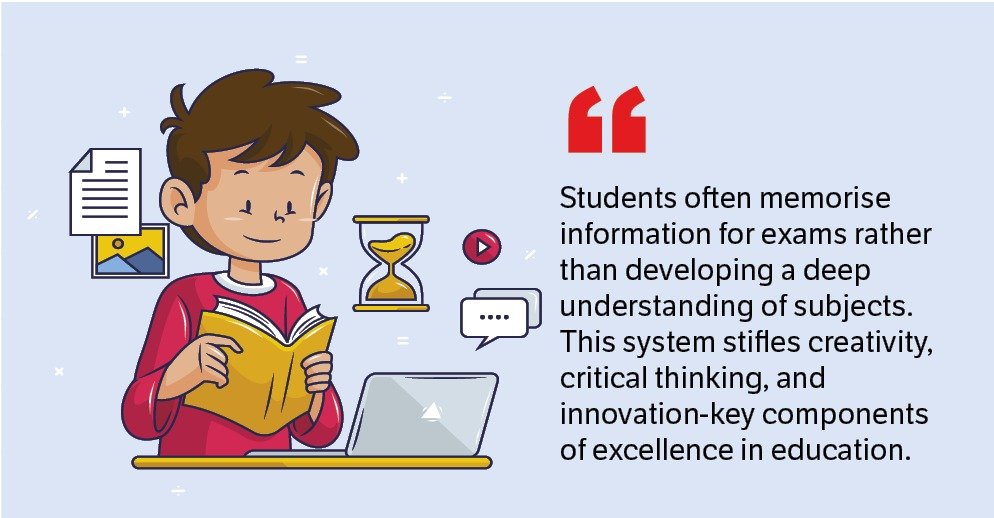
Traditional education system has long been criticised for its emphasis on rote learning and high-stakes examinations. Students often memorise information for exams rather than developing a deep understanding of subjects. This system stifles creativity, critical thinking, and innovation—key components of excellence in education.
To combat this, educational reform is needed. The focus should shift from rote memorisation to fostering skills such as problem-solving, analysis, and creativity. Assessments should also evolve to include project-based evaluations, practical exams, and holistic assessments that consider students’ overall development, not just their academic scores.
Teacher Quality &Professional Development
It’s an admitted fact that many teachers are not adequately trained or supported in their professional development. This leads to variations in the quality of teaching, with some students receiving an outstanding education and others not benefiting from effective instruction. Teacher professional development programs should be a priority, equipping educators with modern teaching methodologies, subject expertise, and the tools needed to handle diverse classrooms.
Creating an Equitable Environment for excellence
For excellence in education, it is crucial that equity is embedded into every aspect of the system. This means ensuring that students from all backgrounds—whether economically disadvantaged, from rural areas, or belonging to marginalised communities—are given the same opportunities to succeed. Initiatives such as scholarships, reservations in higher education, and educational reforms aimed at reducing disparities are essential in creating an environment where excellence is accessible to all.
Ultimately, excellence in education is not just about producing high-performing students. It’s about creating an environment that nurtures each student’s unique potential and provides them with the tools, resources, and opportunities to thrive, regardless of their background.