
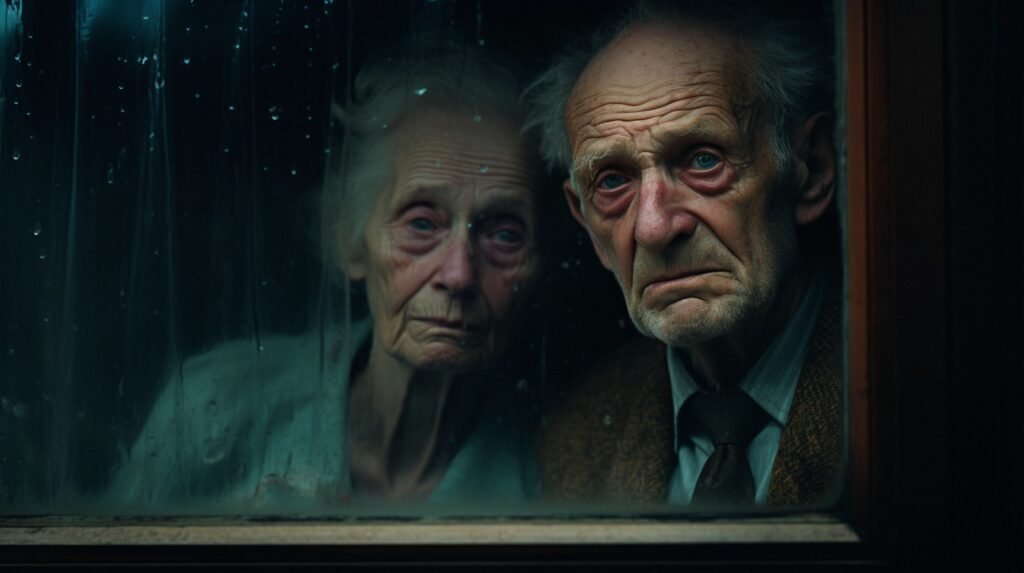
Elders are a treasure to our society. They form a rich repository of knowledge and experience which we cannot afford to ignore. Let’s empower them to lead an active and participatory life.
Sajjad Bazaz
Over a period of time, the plight of elders at the hands of their family members or outsiders has emerged as a major concern in societies across the globe. In a scenario when inventions in medical science have extended the life span of humans, it has resulted in a bane for millions of elderly people in the country as they find themselves subjugated and exposed to more miseries in the extended span of life. Considered as a spent force, they mostly remain outside the radar of any welfare measure. All around people talk about empowering individuals, specific genders and overall societies for ‘better future’. But amid this empowerment breeze, I hardly come across any emphasis on empowering elders falling in the senior citizens’ category.
What we have observed is that when an individual assumes a senior citizen status, he loses empowerment which he would have enjoyed during the prime years of his life. Almost all empowerment machinery comes to a halt for him at this later stage of his life. For all his life he accumulates every comfort for his family, but is left uncomfortable as an elder. Of course, this doesn’t happen with all, but most of them suffer.
Some time back, I had an opportunity to listen to a group of college students who were debating social issues during an innovative session organized by the college management. The students deliberated on serious issues like child labour, need for an old age home in Kashmir, moral values etc. The 3-hour long deliberation was a strong reminder for all of us to address the problems eating up our society well under the nose of our consciousness.
Among the varied topics debated during the programme, it was a thought provoking question when the need of having an old aged home came up for discussion. Do we need such homes in Kashmir? A quick unanimous response is a big ‘No’. Apparently, the ‘No’ is based on the argument that ours is a society where parents are not deserted by their children. Of course, the argument holds ground. But it’s not a deserting phenomenon alone which ignites a need to have an old age home. The fact is that in geography like ours, unforeseen conditions have left elderly parents, whether rich or poor, in a lurch.
It’s pertinent to mention that all of us, whether rich or poor, in one way or the other traverse life in misery and poverty. We as poor are desperate for our survival, while being rich makes us suffer fear syndrome of losing wealth. If we have power we remain panicked by potential instability. We have a huge chain of rich people here who turned out to be poor when some misery confronted them at the later stage of their life.
Meanwhile, it’s a fact that our elders at the fag end of their life have no insecurity because of the social setup which has always reserved huge space for their comfort. But over a period of time this space stands squeezed and it’s the financial insecurity which today remains a major concern for them. For example, they own a house, but remain financially poor owing to lack of regular income to meet their day to day needs. Here I am trying to make a point that getting old without any proper financial backup to meet day to day expenses can be upsetting. With the rising cost of living and no regular income at old age can turn problematic. It’s here the need for an old age home arises. These homes can take care of their health and financial problems.
It’s worth mentioning that over a period of time shifting economic forces eating up our tradition are fast reshaping our residence patterns. A trend is in motion where children are distantly moving away from their parents to shape their careers. This has created a new section of the population of ‘alone parents’. Once this section of population steps as senior citizens, a sense of lacking empowerment begins to haunt them. Increasing urbanization and fast growing nuclear family culture begins to further compound their miseries and they are forced to fend for themselves. This situation further deteriorates by increase in the cost of living accompanied by longer life expectancy.
Precisely there is a huge segment of elders who have no one to fall back upon for support. Be it any mode of travel, matters related to their health or availing financial services, elders, these senior citizens deserve a special home.
Apart from looking at old age homes as a solution to address the plight of suffering senior citizens, there is another alternative for them to ensure a comfortable life in absence of a family support. There is a financial security scheme introduced in 2007 by the central government where an elderly owner of a house property can have funds against the mortgage of the property without repaying it almost during its lifetime. However, a borrower can prepay it at any time during the tenor of the loan. Otherwise the loan is recovered after the death of the borrower by putting the house on sale. The scheme in vogue is the ‘Reverse Mortgage’ loan scheme.
We have a good chunk of such elders who have property but no sustained source of income or lack financial support from the children to fend for themselves for the rest of their life. It’s also a fact that most of our elders have developed a tendency to live separately, preferably without depending on their children for their amenities and medical needs. So the reverse mortgage is a financial cushion to such elders to fall back upon for assured financial support.
To conclude, we need to understand that elders are a treasure to our society. They form a rich repository of knowledge and experience which we cannot afford to ignore. Let’s empower them to lead an active and participatory life.