
“A lamp can only light another lamp when it continues to burn its own flame” – Rabindranath Tagore
Before I pen down the invaluable treasures of our culture and heritage, I put on record my appreciation to the editorial team of the SHAECH magazine for highlighting contemporary topics for the benefit of the readers – be it teachers, students or parents.
As far as culture and heritage are concerned, these are the twin pillars of human identity, embodying our collective memory and evolution. As all of you understand, culture refers to the dynamic practices, beliefs, arts, and knowledge that define societies, while heritage comprises the tangible and intangible legacies that we inherit from our ancestors. And, together, they form the soul of humanity.
In other words, culture and heritage are the lifeblood of identity and continuity, providing individuals and communities with a sense of belonging and purpose. Preserving this culture and heritage is of utmost importance. Research emphasises the benefits of cultural preservation. A study published in the Journal of Cultural Heritage Management states, “Preservation efforts not only safeguard history but also enhance societal well-being by fostering a sense of pride and cohesion.”
Our country’s cultural diversity is unparalleled. Each festival celebrated here unites millions, transcending barriers of religion and region. Traditional crafts reflect the country’s artistic brilliance and regional uniqueness.
Preserving this heritage strengthens unity. Shared cultural practices remind us of our roots and interconnectedness. However, preservation efforts must remain inclusive. Overemphasis on certain traditions or sites at the expense of others needs to be avoided as such acts can trigger alienating marginalised communities.
Heritage preservation is also an economic imperative. We are already witnessing tourism centred around cultural landmarks generating substantial revenue and employment. However,preservation requires a multi-pronged strategy where governments, communities, and individuals are involved.
It’s worth mentioning that technology offers a host of possibilities for heritage preservation. As per the experts, digital mapping, 3D reconstructions, and virtual tours make heritage accessible to a global audience while ensuring documentation for posterity. Initiatives like the creation of online archives for endangered languages ensure that even the most fragile aspects of culture are safeguarded.
There is no denying the fact that culture faces relentless threats. Rapid urbanisation, climate change, and the forces of globalisation are eroding heritage sites and practices. Here we have to understand that the loss of heritage is not just aesthetic, it is existential. A UNESCO report is worth quoting. It warns that “each lost cultural site or practice diminishes humanity’s collective diversity and resilience.”
The situation demands a balance between preservation and progress. All those policies promoting sustainable tourism, empowering local communities as custodians, and integrating heritage education into school curricula are steps in the right direction.
An eminent historian Romila Thapar notes, “Heritage is not static; it evolves with time. But its essence must be protected to ensure continuity.” If we look at our country’s efforts – from government initiatives to community-driven projects – those are commendable. However,complacency has no room and much more remains to be done.
In a world often driven by momentary trends, culture offers permanence. It reminds us of our shared humanity and enriches our understanding of life’s complexities. To lose it would be to lose ourselves—a loss we must collectively strive to prevent. By safeguarding our cultural wealth, we honour those who were there before us and empower those who will follow us.
Taking a cue from Tagore’s quote, which I mentioned in the beginning of this message, culture and heritage are the flame for it is the beacon of our identity.
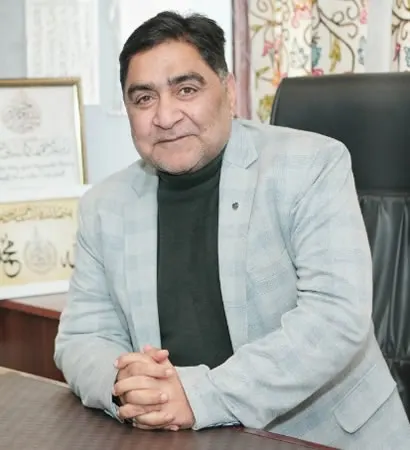
– Tariq Baktoo