
When was the last time we spoke Kashmiri without lowering our voice, without feeling the need to translate ourselves?
There was a time when our language filled homes without hesitation—when Koshur echoed freely in courtyards, kitchens, laughter, and even in silence. It was the language of comfort, of arguments, of affection, and of belonging. Today, as the world grows increasingly global, we often mistake distance from our roots for progress. Slowly, almost unknowingly, we begin to believe that speaking Kashmiri makes us sound less educated, less modern, less “refined.” And in that quiet shift, something deeply meaningful begins to change.
Culture rarely disappears overnight.
It lives, it adapts, and it moves with time.
Yet it survives only when it is practised, spoken, and shared.
Kashmiri heritage has always lived in simplicity—in shared meals eaten together, in winter evenings wrapped in pherans, in the warmth of kehwa held gently between two hands. These were never just habits; they were ways of belonging, ways of staying connected to one another. Even today, these small rituals continue to remind us of who we are, anchoring us in a world that is constantly moving forward.
And then there is art—silent, patient, enduring.
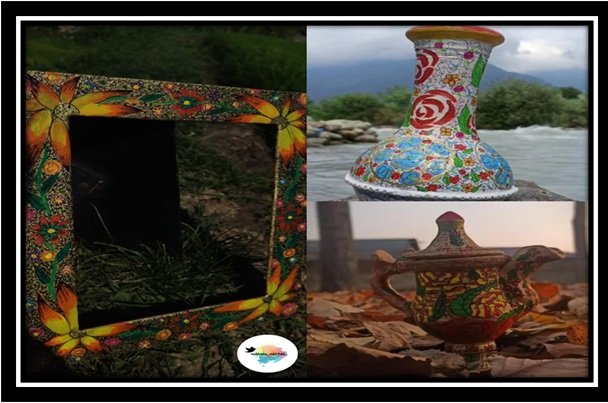
Kashmiri papier-mache is not merely decoration; it is memory shaped by hands. Each pot, and each careful brushstroke carries generations of craftsmanship. The delicate floral patterns, the intricate detailing, the hours of devotion—this art teaches us patience, care, and pride. When we paint or preserve papier-mâché, we are not simply creating objects of beauty; we are participating in a living tradition that continues to speak through colour and form.
Look closely at these crafts and ask yourself: What stories do they carry, and who will carry them forward?
Our identity, like our art, is delicate yet resilient. It needs care. It needs confidence. Kashmir has always known how to engage with the world while remaining unmistakably itself. Embracing modernity does not require abandoning our heritage; rather, it asks us to carry it with understanding and intention.
To be modern does not mean to be rootless. True progress lies in balance. It lies in speaking our language with pride, in valuing our crafts without calling them outdated, and in recognising that heritage is not a weight from the past—it is a quiet inheritance that shapes our present and guides our future.Because what we carry forward matters.
And in carrying our language, our art, and our traditions with care, we continue to belong—
to our land, to our people, and to ourselves.
As Zareef Ahmad Zareef quotes it beautifully-
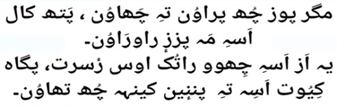
It is true that we grow and we flourish, but growth must never mean forgetting.
What we use today was preserved for us by the past,
guarded with care, carried through time.
And just as we inherited something to stand on,
we too must leave behind something worthy—
for our people, for those yet to come.
MUSKAAN MUSHTAQ RAINA
12th HUMANITIES