
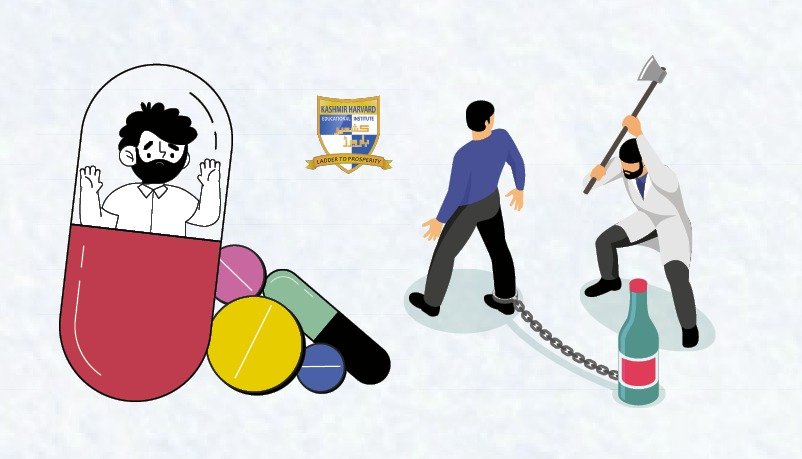
‘Say No to Drugs, Say Yes to Dreams’
Muskaan Mushtaq Raina
Class 12 Humanities
Drug abuse has emerged as one of the most serious public health and social challenges of the modern era. Affecting people across all age groups and social backgrounds, substance abuse continues to undermine individual well-being, family stability, and societal progress. Despite growing awareness and stricter laws, the misuse of drugs remains a significant concern worldwide, particularly among young people. What often begins as experimentation or curiosity can quickly evolve into dependency, leading to devastating consequences for both the individual and society.
The scale of the problem is alarming. According to the United Nations Office on Drugs and Crime
(UNODC), nearly 296 million people worldwide used drugs in a recent year, marking a substantial increase over the past decade. Furthermore, approximately 39.5 million individuals suffer from drug use disorders that require treatment and rehabilitation. Drug abuse contributes to hundreds of thousands of deaths annually through overdoses, accidents, violence, and health complications associated with substance use. These statistics highlight the urgent need for comprehensive action at both national and international levels.
Drug abuse refers to the harmful or excessive consumption of psychoactive substances, including illegal narcotics, prescription medications used without medical supervision, and other addictive substances. Such substances alter the normal functioning of the brain and body, impairing judgment, decision-making, and self-control. Over time, repeated use can result in addiction, a chronic condition that affects an individual’s physical, psychological, and social well-being.
The causes of drug abuse are complex and multifaceted. Peer pressure remains one of the most common factors, particularly among adolescents who may seek acceptance within social groups. Mental health challenges such as stress, anxiety, depression, and emotional trauma often drive individuals toward substance use as a means of escape. Family conflicts, lack of parental supervision, unemployment, social isolation, and the easy availability of drugs further increase the risk of addiction. In many cases, misinformation and the glamorisation of drug use create a false perception that substance abuse is harmless or socially desirable.
The consequences of drug abuse are far-reaching. Physically, prolonged substance use can damage vital organs such as the brain, heart, liver, lungs, and kidneys. It weakens the immune system and increases vulnerability to serious illnesses. Mentally, drug abuse is strongly linked to depression, anxiety disorders, psychosis, memory impairment, and cognitive decline. Individuals suffering from substance use disorders are also at a greater risk of self-harm and suicide. Beyond health-related concerns, addiction often disrupts relationships, destroys careers, and diminishes quality of life.
The social and economic impact of drug abuse is equally severe. Communities affected by widespread substance abuse often experience increased crime rates, domestic violence, family breakdowns, and reduced workplace productivity. Educational institutions face higher dropout rates among students struggling with addiction, while healthcare systems bear substantial costs associated with treatment and rehabilitation. The cumulative economic burden of drug abuse amounts to billions of dollars globally each year, reflecting its widespread impact on society.
Young people remain among the most vulnerable victims of this crisis. Studies indicate that many individuals first experiment with drugs during adolescence, a critical stage of personal development. In India, millions of people are affected by substance dependence, with a significant proportion belonging to the youth population. Early exposure to drugs not only increases the likelihood of long-term addiction but also jeopardises educational attainment, career opportunities, and personal growth. The growing prevalence of substance abuse among youth poses a serious threat to the nation’s future and demands immediate attention.
Recognising the gravity of the problem, the Government of India launched the Nasha Mukt Bharat
Abhiyaan (Drug-Free India Campaign) on 15 August 2020 under the Ministry of Social Justice and Empowerment. Initially introduced in 272 vulnerable districts and later expanded nationwide, the campaign aims to create awareness about the dangers of drug abuse, reduce demand for narcotic substances, and strengthen treatment and rehabilitation services. Through educational programs, community outreach initiatives, awareness drives, counselling services, and public participation, the campaign seeks to foster a drug-free society. The initiative reflects the understanding that effective action against drug abuse requires not only law enforcement but also education, prevention, rehabilitation, and community engagement.
Addressing drug abuse requires a collective effort involving families, schools, healthcare professionals, community organisations, and governments. Awareness and education are essential in helping individuals understand the risks associated with substance use. Accessible mental health services can provide support to those struggling with emotional and psychological challenges. Strong family relationships and open communication can act as protective factors against addiction, while effective rehabilitation programs can help affected individuals recover and reintegrate into society. Simultaneously, governments must continue efforts to combat drug trafficking networks and strengthen policies that promote prevention and treatment.
Drug abuse is not merely an individual problem; it is a societal challenge with profound human, social, and economic consequences. With nearly 296 million drug users worldwide and millions suffering from addiction-related disorders, the urgency of addressing this issue cannot be overstated. Through awareness, education, compassion, and collective responsibility, societies can reduce the impact of substance abuse and safeguard future generations. The vision of a drug-free society can only be achieved when individuals, communities, and governments work together to promote healthy choices, support those in need, and build a future free from the destructive effects of addiction.
>>>>>>>>>>>>
Drug Abuse
Drugs may seem a fleeting friend,
But lead to sorrow in the end.
They steal our dreams, our health, our light,
And turn bright days into endless night.
Choose hope, choose strength, choose a better way,
Let wisdom guide you every day.
Say no to drugs, let your future shine,
For your life is precious and truly divine
Fazila Abida Akbar
12th hum