
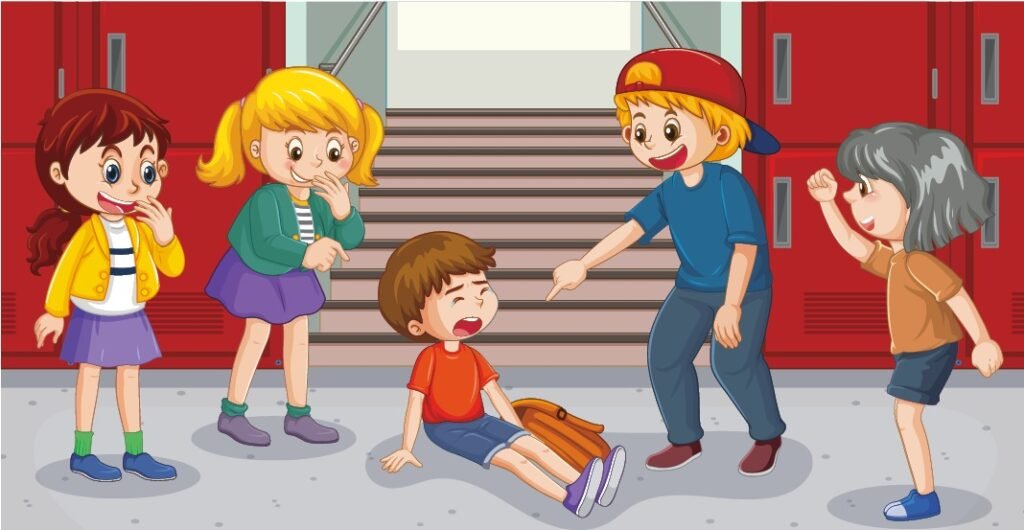
Discipline is not a burden placed on children but a gift given to them, a guiding force that helps them navigate life with confidence, responsibility, and purpose.

Gowher Bhat
Discipline in school children has always been seen as the foundation of a good education. Many people think of discipline as strict rules, silence in classrooms, and complete obedience. But in reality, discipline is much more than that. It is about shaping a child’s character, building responsibility, and helping them grow into thoughtful and balanced individuals. In today’s fast changing world, where children face distractions from technology, social pressure, and emotional challenges, the meaning of discipline is changing. Schools are slowly moving away from fear based discipline toward more understanding and supportive approaches.
At its heart, discipline is not about controlling children but about teaching them how to control themselves. This is called self discipline, and it is one of the most important life skills a child can develop. According to the American Psychological Association, self regulation skills developed in childhood are closely linked to better academic performance, emotional health, and long term success in life. Schools play a major role in this because children spend a large part of their day there. A well disciplined school environment creates a sense of order and safety, allowing students to learn without unnecessary distractions.
Discipline also helps children learn important values. It teaches them to be punctual, to respect others, and to take responsibility for their actions. These values are not only useful in school but also in everyday life. A child who learns discipline early is more likely to grow into an adult who can manage time well, work responsibly, and maintain healthy relationships. Over time, the discipline that is guided by teachers and parents becomes a habit, and eventually, it becomes a part of the child’s personality.
There is a strong connection between discipline and academic success. Students who follow routines, complete their work on time, and pay attention in class usually perform better in their studies. Discipline helps reduce distractions and allows students to concentrate on their learning. However, it is important to understand that not all forms of discipline are helpful. The way discipline is practiced makes a big difference.
Research in India supports this clearly. A study published in the journal World Development found that positive reinforcement, such as praise and encouragement, improves children’s cognitive performance, while harsh punishment reduces learning outcomes and confidence. This shows that discipline should not be about punishment but about guidance. When children feel supported, they are more willing to learn and improve.
Similar findings have been reported in the United States. The U.S. Department of Education has noted that frequent suspensions and expulsions are linked to lower academic achievement and higher dropout rates. Because of this, many schools in the United States are now rethinking strict disciplinary policies and moving toward more supportive approaches.
One important method gaining attention is restorative discipline. According to the National Education Association, restorative practices help students take responsibility for their actions while also repairing relationships. Instead of simply punishing a child, this approach focuses on understanding the reason behind the behaviour and guiding the child toward improvement. For example, if a student hurts another, they are encouraged to apologise and rebuild trust. This not only corrects behaviour but also teaches empathy and accountability.
The emotional impact of discipline on children is very important. Discipline affects not only how children behave but also how they feel. Research highlighted by the UNICEF shows that harsh disciplinary practices can harm a child’s mental health, leading to fear, anxiety, and low self esteem. On the other hand, respectful and fair discipline helps children feel safe, valued, and connected to their school environment.
In India, the idea of discipline is slowly changing. The National Council of Educational Research and Training has recommended that schools move away from fear based discipline and focus more on child friendly approaches. There is growing awareness that punishment based systems can harm both learning and emotional development. Many schools are now trying to create environments where students feel respected and understood.
At the same time, it is important to recognise that discipline problems are not always caused by children alone. Many factors affect a child’s behaviour, such as family environment, stress, and lack of emotional support. Studies in education and psychology suggest that children who experience stress or instability at home are more likely to show behavioural challenges in school. Understanding these factors is important for dealing with discipline in a fair and effective way.
Teachers have a very important role in shaping discipline. A teacher’s behaviour and attitude can greatly influence students. When teachers are calm, fair, and consistent, students are more likely to respect them and follow rules. Research in teacher education shows that effective classroom management is strongly linked to positive teacher student relationships. Good teachers do not just enforce discipline, they model it.
Parents also play a key role. Discipline does not begin in school, it starts at home. Children learn a lot by observing their parents. If parents are patient, respectful, and consistent, children are likely to develop similar qualities. A stable and supportive home environment helps reinforce the discipline taught in school. Communication between parents and teachers is also very important.
Modern education encourages what is known as positive discipline. This approach focuses on teaching rather than punishing. It involves setting clear rules, explaining expectations, and encouraging good behaviour. The Centres for Disease Control and Prevention also supports positive parenting and discipline strategies, noting that they lead to better emotional and behavioural outcomes in children.
Positive discipline helps children develop important life skills. They learn how to solve problems, manage their emotions, and understand the feelings of others. These skills are essential for their overall development and future success.
However, maintaining discipline in today’s schools is not easy. Classrooms are often large, and students come from different backgrounds with different needs. Technology and social media have also changed the way children think and behave. Teachers have to deal with many challenges while trying to maintain order and support learning.
It is also important to remember that discipline should never harm a child’s dignity. Every child deserves to be treated with respect. Discipline should guide and support children, not break their confidence. Schools must create environments where children feel safe to express themselves while also learning the importance of rules and responsibility.
In the end, discipline in school children is not about strict control or fear. It is about helping children grow into responsible and caring individuals. True discipline comes from within, not from outside pressure. When children understand why discipline matters and feel supported, they are more likely to develop strong values and good habits.
As both India and the United States move toward more positive and understanding approaches, it is clear that the future of discipline lies in balance. Discipline should combine structure with compassion, rules with understanding, and guidance with respect. When this balance is achieved, discipline becomes a powerful tool that not only improves behaviour but also shapes character and builds a better future for children.
In this way, discipline is not a burden placed on children but a gift given to them, a guiding force that helps them navigate life with confidence, responsibility, and purpose.