

When classrooms transform,mindsets transform—and with them, the world our students will one day lead. In reimagining classrooms, we reimagine education: not as a race to finish the syllabus, but as a journey of discovery, inclusion, and inspiration for every child.
Mohammad Shahkar Mearaj
Classrooms are no longer just four walls, a blackboard, and rows of desks. In a rapidly changing world, the purpose of education has expanded beyond memorising facts to nurturing creativity, critical thinking, collaboration, and empathy. As a result, classrooms themselves must transform—evolving into inclusive, modern learning spaces that prepare students not only for examinations, but for life. At the heart of this transformation lies a simple yet powerful idea: every child deserves an environment where they feel valued, supported, and inspired to learn.
Traditional classrooms were often teacher-centred, following a one-size-fits-all approach to instruction. While this model served earlier generations, it does not fully address the diverse learning needs of today’s students. Modern classrooms shift the focus from teaching to learning, where students actively participate, question, explore, and collaborate. Flexible seating arrangements, learning corners, group tables, and discussion circles replace rigid desk rows. Such designs encourage interaction, teamwork, and peer learning, helping students develop communication and social skills alongside academic knowledge.
An inclusive classroom recognises that students learn in different ways and at different paces. Itembraces diversity—of abilities, backgrounds, languages, and perspectives. Inclusive learning spaces aim to remove barriers rather than create them. This includes physical accessibility for students with disabilities, such as ramps, adjustable desks, and clear movement spaces. It also involves inclusive teaching practices, including visual aids, hands-on activities, storytelling, technology, and differentiated instruction, ensuring that no learner is left behind. Most importantly, an inclusive classroom fosters a culture of respect and belonging. When students feel safe to express themselves without fear of judgement, confidence grows and learning becomes meaningful.
Modern classrooms also integrate technology thoughtfully to enhance learning experiences. Smart boards, tablets, educational apps, and digital libraries provide access to a world of knowledge beyond textbooks. Technology makes lessons more interactive through videos, simulations, and virtual experiments, helping students grasp complex concepts with ease. However, technology is not meant to replace teachers – it empowers them. A skilled teacher uses digital tools to personalize learning, track progress, and encourage curiosity, while continuing to guide, mentor, and inspire students.
Modern learning spaces are designed to spark imagination. Display boards showcasing student work, reading nooks filled with books, and areas dedicated to art, music, and innovation help students discover their talents and passions. Problem-solving activities, project-based learning, and real-world connections encourage students to think critically rather than memorise answers. Such classrooms prepare learners to face challenges with confidence, adaptability, and originality—skills essential in the 21st century.
While infrastructure and technology play a significant role, the true transformation of classrooms depends on teachers. In modern learning spaces, teachers act as facilitators and guides rather thansolesources of knowledge. They encourage inquiry, nurture curiosity, and support students emotionally as well as academically. Continuous professional development ensures that educators remain equipped with modern teaching strategies and inclusive practices. A transformed classroom is one where teachers and students grow together.
Transforming classrooms is not merely about modern furniture or digital tools; it is about creating environments that shape character, values, and lifelong learning habits. Inclusive, modern classrooms empower students to respect differences, collaborate effectively, and believe in their own potential. As schools invest in such learning spaces, they invest in the future of society itself. When classrooms transform,mindsets transform—and with them, the world our students will one day lead. In reimagining classrooms, we reimagine education: not as a race to finish the syllabus, but as a journey of discovery, inclusion, and inspiration for every child.

Classrooms must become spaces of dignity, participation, and equality
An interview with a Kashmiri teenager highlights how society’s labels shape her school life and identity. Her reflections show why classrooms must move beyond pity to become spaces of dignity,participation,and equality.
Ms. Shabana: Growing up in Kashmiri society, what has it been like for you?
Student: It’s tough. People often call me “langi” (crippled) or “bechari” (helpless girl). Some even say“ nazar kharab” (bad omen). These words make me feel like I’m only seen for my disability, not for who Iam.
Ms. Shabana: And how does that affect your school life?
Student: At school, I want to join everything—debates, plays, group projects. But sometimesteachers orclassmates assume I can’t manage. If there’s a sports event, I’m told to just sit and watch. That makes mefeel invisible. What I need is not pity, but a chance to participate in ways thatsuit me.
Ms. Shabana: Has literature or any subject in school ever helped you see yourself differently?
Student: You know, one chapter in our Class 12 English book really changed how I look at myself. It’s onthe face of It. Reading about Derry and Mr. Lamb made me realise that people often judge by appearances, but that doesn’t define us. What truly helped was the way our teacher taught it—she asked us to reflect on our own lives and how words shape identity. Mr. Lamb’s courage, combined with my teacher’sencouragement, taught me that disability doesn’t mean weakness. It gave me strength to see myself differently—not as “bechari”, but as someone who can live fully.
Ms. Shabana: That’s inspiring. If you could redesign Kashmiri classrooms, what would they look like?
Student: First, they’d be physically accessible—ramps, proper seating, and technology that helps. But more importantly, teachers should stop using words like “bechari” and instead encourage us. If teachers set the tone, classmates will follow. A modern classroom should be a place where every student feels equal, no matter their abilities.
Ms. Shabana: And what message would you give to Kashmiri society?
Student: Please don’t see us as “nazar kharab.” See us as “zinda dil” (full of life). We are capable, creative, and determined. Inclusion isn’t charity—it’s respect. Change your words, and you’ll change our world.
‘Her reflections remind us that transformation begins with empathy, language, and the way teachers
frame learning. Modern classrooms must celebrate every child’s spirit, ensuring no student is defined by limitation, but by possibility’.
About the Interviewer
Shabana Aziz is an English Lecturer at Kashmir Harvard. She has been actively fostering student voices through literature and dialogue.
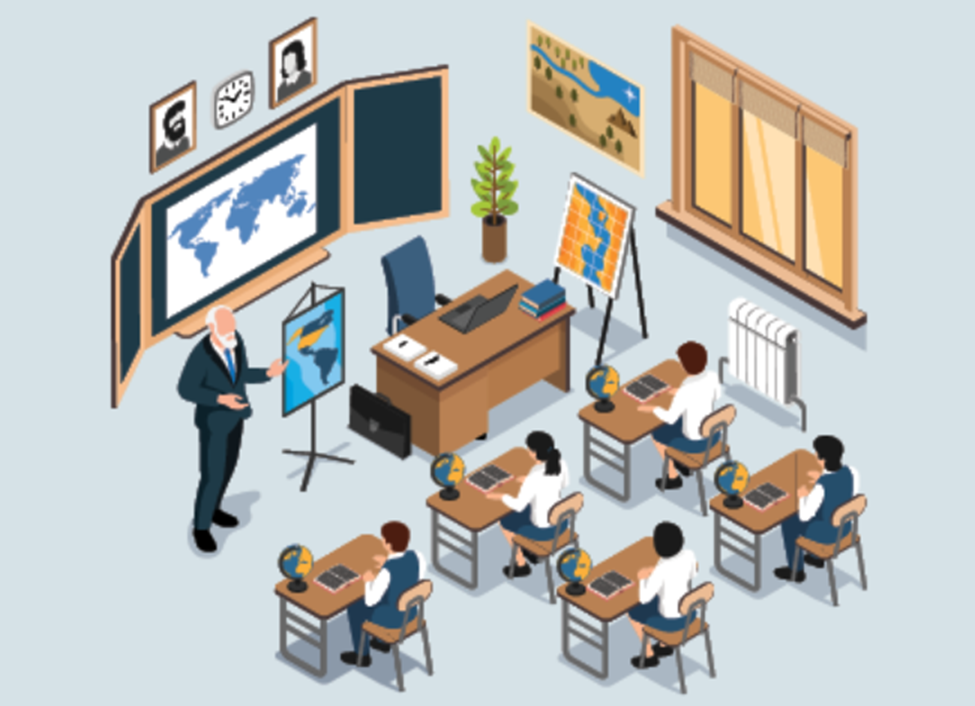
A Classroom Reimagined
The classroom walls begin to shift,
Built not to confine, but to lift.
No longer rigid, cold, or grey,
The old-world order fades away.
For every student, a world remade,
No more rows in silence laid.
Where one size fit each weary seat,
Now voices rise, and minds compete.
The singular pace, the single voice,
Replaced by light, by thoughtful choice.
A vibrant hub where differences gleam,
A tapestry woven from a shared bright dream.
With digital streams and soft-lit nooks,
For varied minds and varied books.
Some learn by doing — hand and eye,
While others watch the data fly.
The pace is fluid, the pressure low,
In spaces where all learners grow.
Empathy shapes the lesson plan,
A brighter age of learning began.
Each child now walks their own way,
Finding their voice, come what may.
The future calls for minds set free,
A space to learn, a right to be.
By Sofi Mohammad Ibrahim
Class 9th Daisy | Roll no. 37