
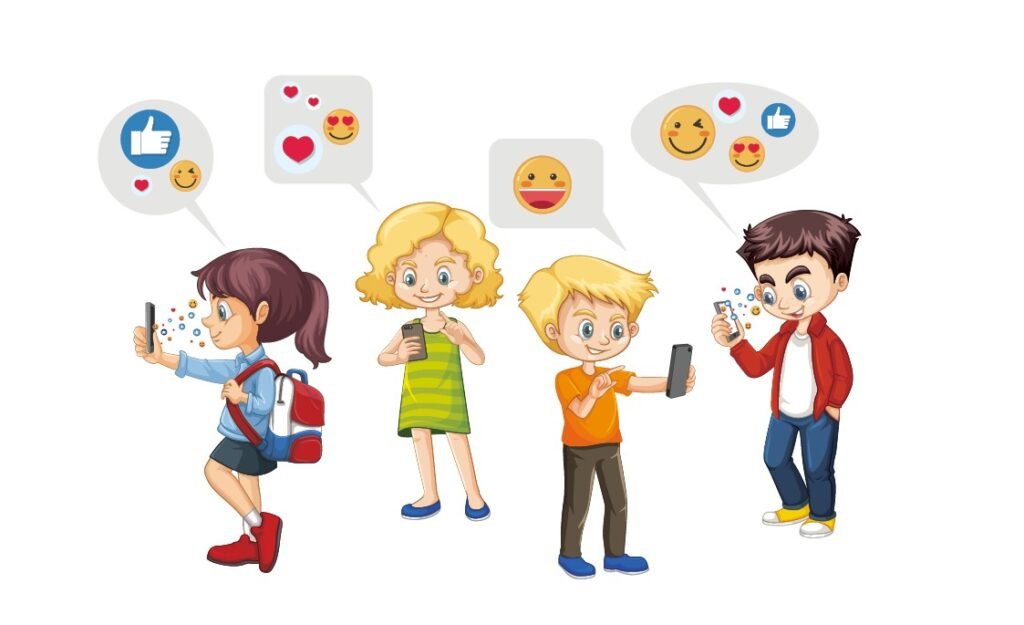
Today, it is difficult to imagine education without technology. Computers, the internet, and digital tools have become an important part of students’ lives. Social media, in particular, has a strong influence on school education.
When used properly, social media can be helpful for students. It allows them to find information quickly, watch educational videos, and communicate with teachers and classmates. Online platforms can make learning more interesting and interactive. Students can also learn about different ideas and cultures through social media.
However, social media also has negative effects. It easily distracts students from their studies. Many students spend long hours scrolling through posts instead of reading books or completing assignments. Social media can also spread false information, which may confuse young learners. Because of this, students must learn to think carefully about what they see online. Not everything shared on social media is true or useful. Developing critical thinking skills is very important in today’s digital world.
Another serious concern is the decline in reading habits. Earlier, students spent more time reading books. Today, mobile phones and social media have replaced books for many students. Reading books helps students think deeply, improve language skills, and understand ideas clearly. Social media often encourages quick reading rather than deep understanding. The importance of reading has been beautifully expressed by poet Gulzar, who writes,
“Kitaabon se jo pyaar karta hai,
woh kabhi tanha nahi hota.”
These lines remind us that books offer quiet companionship and deep understanding. Unlike social media, which encourages constant distraction, books help students think calmly, reflect deeply, and develop patience—qualities that are essential for meaningful learning.
A classroom should be a place where students learn through discussion, questions, and reflection. Social media cannot replace the value of face-to-face interaction between teachers and students. Books and classrooms help shape students’ thinking and character in ways that screens cannot. Social media is an important part of modern education, but it should be used carefully. It should support learning, not control it. Students must remember that no technology can replace the joy of reading, thinking, and learning with patience.The unchecked dominance of technology also raises concerns about the loss of human sensitivity and reflection. Poet Muhammad Iqbal powerfully cautions against allowing machines to rule human life when he writes,
“Hai dil ke liye maut mashinon ki hukumat,
Ehsas-e-marawwat ko kuchal dete hain aalaat.”
These lines warn that blind dependence on machines can suppress compassion, thought, and moral awareness. Education must therefore ensure that technology serves human values rather than replacing them.
In conclusion, social media has both advantages and disadvantages. If used wisely, it can help students learn and grow. If misused, it can distract them and weaken their interest in learning. The choice lies with us.
(By Bareen Fayaz, 9th Lily)
Learning of Ease
The digital stage has made learning fine,
Laying bare each concept, line by line.
The hours of labour spent to search a word,
Now take just seconds—almost unheard.
Children once too shy to question aloud,
Find answers here, clear and unbowed.
Doubts that crowded the restless mind,
Vanished like miracles, swift and kind.
The knowledge within is endless and vast,
Like open fields of soft, springing grass.
This is the learning that children seek.
Learning of ease, where fun and thought speak.
(By Mariyam Zahira, 10th Marigold)
Social Media in School
Social media helps us learn with ease,
Quick videos, notes, answers in seconds please.
Doubts are cleared when books feel boring and slow,
Learning moves faster than we can ever know.
But screens distract us during class,
Minutes fade, and hours pass.
If used too much, focus fails,
And learning will stop instead of setting sail.
(By Madiha Hilal, 10th Marigold)
Scrolling For Knowledge
Until recently, it would have been unimaginable that a tweet or an Instagram post could be used as a teaching resource. However, in the current era, social media has become an important tool in education, especially for teenagers. While often viewed merely as a source of entertainment, these platforms are now reshaping the way students collaborate, communicate, and share knowledge in the modern world.
A World of Knowledge at Your Fingertips
Social media facilitates collaboration among students. Platforms such as Facebook and WhatsApp allow learners to create study groups where they can share notes, discuss topics, and help one another understand difficult concepts. Moreover, social media enhances communication between students and educators. Teachers can use platforms like Twitter and Instagram to post updates, share educational content, and provide feedback. In addition, these platforms offer access to a vast range of information. YouTube and LinkedIn, for instance, provide educational videos, webinars, and articles that students can use to supplement their learning.
The Hidden Costs of Connectivity
Although social media offers many benefits, it also presents several disadvantages that must be addressed to prevent negative effects on students’ academic performance. One major concern is constant distraction. Frequent notifications and the temptation to check social media feeds can break concentration and reduce productivity. Another serious issue involves security and privacy risks, including exposure to inappropriate content, cyberbullying, and identity theft. Therefore, it is essential to educate young people about protecting their personal information online. Finally, the superficial nature of online interactions can limit meaningful communication and deep learning.
The impact of social media on students is significant, as it provides access to global resources and enhances collaboration and digital skills. However, challenges such as distraction, mental health concerns, and misinformation cannot be ignored. By using social media responsibly ; following reliable sources, setting time limits, and developing digital literacy—students can make effective use of these platforms to support their academic growth.
(By Zainab Irshad, 10th Marigold)