
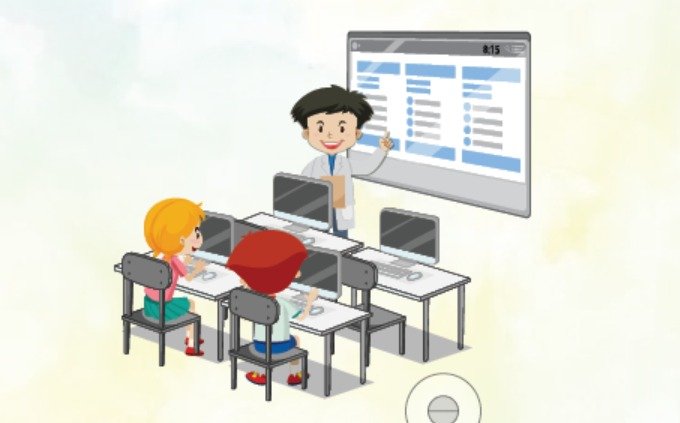
Classroom management is not control alone. It is care. It is not silence alone. It is an engagement. It is not rules without reason. It is relationships that matter. It is the steady presence of adults who believe in children, who see their potential, and who refuse to give up on them. It is small, quiet, daily work that transforms lives, one lesson, one child, one classroom at a time.

Gowher Bhat
Classroom management is not a rulebook. It is not a single skill or checklist. It is alive. It is the way sunlight falls across a classroom at dawn. It is the soft shuffle of chairs. It is the teacher’s calm voice, watchful eyes, and quiet breath. It is hope that students will learn. It is fear that they might not.
Across the United States, classroom management is a persistent challenge. In the 2020–21 school year, about 32 percent of public school teachers reported that student misbehavior interfered with instruction, while roughly 37 percent said student tardiness or skipping class disrupted learning. National Center for Education Statistics. These numbers do more than indicate disruption. They reveal a quiet tension, a daily struggle in every classroom, between expectations and reality.
In India, classrooms tell a similar story in a different way. Field studies conducted by the Azim Premji Foundation in 2022 across 41 districts found that while teachers are striving to engage students, many face challenges. Nearly 9 in 10 teachers encouraged students to share personal experiences, and over 7 in 10 used differentiated group learning strategies to keep students involved. Azim Premji University. These figures hint at a fundamental truth: teaching is as much about relationships as it is about lessons. Children do not thrive on instructions alone. They thrive when they are seen, heard, and valued.
Classroom management is often spoken of as if it were a simple skill. Rules, routines, discipline. But research shows it is more than structure. It is relationships. It is noticing when a child’s eyes wander. It is learning names on the first day. It is quiet guidance, repeated with patience. A teacher who recognizes a child’s frustration, who pauses to explain again, or who whispers encouragement in a moment of self-doubt, is doing the work that shapes learning in ways that no checklist can measure.
Studies demonstrate that relationships matter as much, if not more, than rules. Robert J. Marzano, in his extensive review of over 100 research studies, found that classrooms emphasizing strong teacher–student relationships see higher student engagement, fewer disciplinary referrals, and better learning outcomes. Marzano, 2003. In other words, discipline is not only about controlling behavior. It is about creating trust, fostering respect, and nurturing engagement. When a child trusts their teacher, learning becomes less about obligation and more about curiosity.
Structure and clarity matter too. In the United States, Doug Lemov’s Teach Like a Champion outlines practical techniques for establishing clear expectations and predictable routines. Simple strategies, entering class, submitting homework, transitioning between activities, reduce confusion and maximize learning time. Lemov, 2010. Such strategies are deceptively simple, yet they hold immense power. A predictable routine offers children a sense of stability. In a world that often feels chaotic, stability in the classroom allows the mind to open, to focus, to absorb.
Classroom safety is essential. Children cannot learn if they fear ridicule or being ignored. Neuroscience confirms that fear inhibits the brain’s ability to process and store information. Emotional safety is equally important. A teacher who greets students by name, asks about their weekend, or notices when a child is unusually quiet fosters trust and engagement. The Azim Premji Foundation found that teachers creating safe, participatory spaces saw greater student involvement and fewer disruptions. Safety is not simply the absence of chaos; it is the presence of care. It is the invisible net that catches a child who is afraid of falling, who is hesitant to speak, who is struggling silently.
Classroom management is not constant calm. Some days feel like walking on broken glass. Lessons unravel, voices rise, attention scatters. In these moments, consistency is key. Students understand patterns. Johns Hopkins researchers found that consistent teacher responses to behavior reduced office referrals by nearly 30 percent. In India, the National Education Policy 2020 emphasizes structured, predictable learning environments to support children’s focus and well-being. When rules are enforced inconsistently, confusion spreads. But when rules are predictable, children feel safe, understood, and capable of following them.
Yet consistency must be paired with compassion. Teachers in Hyderabad reported that listening to students and showing empathy reduced anxiety and withdrawal. Students are more likely to follow expectations when they feel valued. Engagement is the fulcrum of effective management. Interactive lessons, opportunities for discussion, and varied activities increase participation and reduce disruptive behavior. Engagement is not a luxury. It is the oxygen of a classroom. A quiet, orderly room is meaningless if minds are elsewhere, wandering, disengaged. Children need to feel that learning belongs to them.
Discipline is not punishment. It is guidance. Positive reinforcement, praise, feedback, and chances to correct mistakes produce better results than punitive measures. This approach is backed by studies both in Mumbai and globally. Punishment may stop behavior momentarily, but guidance teaches children to understand, to reflect, and to choose differently the next time. It builds self-discipline, empathy, and resilience, qualities that no examination can measure but every life demands.
Classroom management is also ethical work. It treats children as learners, not problems. Every behavior has a story: hunger, fear, curiosity, need for attention. Teachers who see behind behavior foster learning, safety, and healing. Nel Noddings emphasizes that care is at the heart of teaching. Indian educators highlight inclusive, empathy-driven practices. Ethics in the classroom is not abstract. It is present in every conversation, every correction, every patient pause. It is visible in the respect extended to students and the dignity preserved even in moments of frustration.
Ultimately, classroom management is quiet but powerful. It is the calm voice during transitions, the gentle correction, the patience in repetition, the shared silence when students focus. It is the connection, the relationships, the hope. A classroom is a living system, each child a unique thread in a fabric woven from attention, care, and trust. Disruption is not the enemy. Misbehavior is not proof of failure. They are signals, opportunities to respond, to guide, to teach.
There are no superhuman teachers. There are only those with morning coffee, tired feet, and deep hearts. The real tools are not only desks and markers, but also attention, care, and understanding. Every hand raised, every name remembered, every child seen is a victory. Teachers do not measure their work in headlines or accolades. They measure it in quiet moments: a smile, a corrected mistake, a question asked without fear.
When the day ends, students leave, chairs scrape floors, light fades, doors close. What remains is quiet, possibility, and hope. This is classroom management. This is school. This is the work that matters most, even when unseen, even when unpraised.
Classroom management is not control alone. It is care. It is not silence alone. It is an engagement. It is not rules without reason. It is relationships that matter. It is the steady presence of adults who believe in children, who see their potential, and who refuse to give up on them. It is small, quiet, daily work that transforms lives, one lesson, one child, one classroom at a time.