
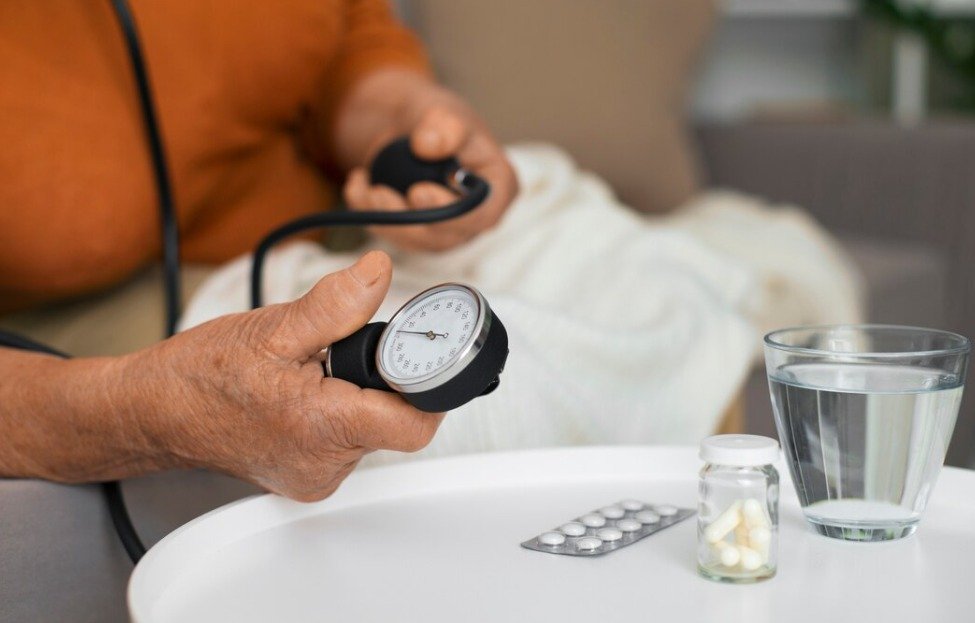
The best method of diagnosing it is to measure the BP periodically by all. Those at high risk need to do it more frequently. Once diagnosed it is easily treatable.
Prof Upendra Kaul
High blood pressure (BP) often termed hypertension is one of the commonest vascular problems seen all over the world. Most cases do not have any underlying cause and that is why in these individuals it is termed as Primary Hypertension. Blood pressure is written as two numbers. The first (systolic) number represents the pressure in blood vessels when the heart contracts or beats. The second (diastolic)number represents the pressure in the vessels when the heart rests between beats. BP is the force exerted by circulating blood against the walls of the body’s major blood vessels (arteries) vessels in the body. We call it hypertension, when the blood pressure is too high. Although most definitions including the Indian one, takes 140/90mms mercury as the cut off. American Heart Association takes it as130/80 mms Hg since 120/80 is the optimal normal BP. It is diagnosed when the elevated pressure is recorded on at least 2different days.
An estimated 1.4 billion adults aged 30–79 years worldwide had hypertension in 2024,most (two-thirds) living in low- and middle-income countries. According to a recent Indian study there are an estimated 300 million adults with hypertension in India. Around4 million persons maybe suffering from hypertension in Kashmir. Modifiable risk factors for hypertension includes unhealthy diets. High salt consumption, a diethigh in saturated fat and trans fats, low intake of fruits and vegetables, consumption of tobacco and alcohol, being over weightor obese and lack of physical activity.
Non- modifiable risk factors include a family history of hypertension, age over 65 years and co-existing diseases such as diabetes or kidney disease.
Symptoms of Hypertension: Most often it has no symptoms and for that reason it is also called a “Silent Killer”. For this reason, measuring BP in all at some stage is essential. Everybody should know his/her BP like know most of us our shirt collar or shoe size. It can however have symptoms like dizziness, headache, nose bleed, anxiety, chest congestion etc.
Measuring BP is easy. These days preference is given to wellcalibrated instruments made by a number of reliable companies. The digital instruments using an oscillometer method are the preferred ones over the dial type or manometric instruments. Mercury manometers which are still used in many places have been completely banned all over the world because of the toxicity of mercury. It has also been recognized that self-measured home recording is the best way to record the BP. It obviates the problem of white coat hypertension seen in about 25% of our population, in a very large “India Heart Study” The other finding from this study was that the evening BP in our population was higher than the morning recordings which was believed to be higher as a customary belief. These findings can have some bearing on the time of drug administration for treating high BP.
Complications of Untreated Hypertension: Un or under treated hypertension leads to serious damage to the muscles of the heart because of more force needed to pump blood. It also leads to hardening of the arteries of the body including those supplying blood to heart, brain, kidneys and eyes. This can lead to heart attacks, brain strokes, blindness and kidney failure. In addition, it can lead to heart failure, impotence, irregularity of heart beat and even sudden death. All these complications can be avoided and minimized by effective treatment strategies.
The complication rates in our patients is higher than those in the western countries because of poor levels of awareness of around45% in the urban and 25% in the rural population. In addition,
hypertension in Indian population is seen at least a decade earlier.
Measures to Reduce complications: Reducing hypertension prevents heart attack, stroke, blindness and kidney damage, as well as many other health problems.
Reducing salt intake to 4 to 5 grams per day, regular exercise, consuming plenty of fruits and seasonal vegetables, stopping cigarette smoking and consuming tobacco, minimizing alcohol intake, reducing fat intake are important non drug methods which can reduce BP by 20/10 mms Hg if practiced regularly.
If the BP still remains more than 140/90 mms Hg., then drug treatment is essential under the supervision of your physician. There are a number of very safe drugs available. Generally, a person with BP more than 160/100 mms Hg needs 2 or more drugs to control BP. To minimize the number of tablets per day needed a variety of drug combinations are available. These improve the compliance of the patient which is very important. Medicines are often needed for very long term or life-long. Their safety is well proven and side effects if any are minimal and disappear with the continued use. Concomitant problems like diabetes and high cholesterol levels always need to be
looked for, and are often associated. If these are present, they need an equally energetic treatment.
It is important to remember that hypertension is a very common problem in adults, both males and females. It occurs a decade earlier in our country. Its early recognition is very important and easy. The best method of diagnosing it is to measure the BP periodically by all. Those at high risk need to do it more frequently. Once diagnosed it is easily treatable. The treatment is both life style modification and drug treatment, often in combination. It prevents and minimizes the
complications which leads to a long and healthy life.
Key facts
- An estimated 1.4 billion adults aged 30–79 years worldwide had hypertension in 2024; this represents 33% of the population in this age range.
- Two-thirds of adults aged 30–79 years who have hypertension live in low- and middle-income countries.
- An estimated 600 million adults with hypertension (44%) are unaware that they have the condition.
- Approximately 630 million adults with hypertension (44%) are diagnosed and treated.
- Approximately 320 million adults with hypertension (23%) have it under control.
- Hypertension is a major cause of premature death worldwide.
- One of the global targets for non communicable diseases is to reduce the prevalence of uncontrolled hypertension by 25% between 2010 and 2025.
(The author is a Cardiologist. Recipient of Dr B C Roy Award and Padma Shir Award and Founder Director Gauri Heart Centre ,Srinagar.)